This is Part 2 of The Foundation. In the previous installment, we explored what brand equity is and why it determines what your business is worth. If you have not read it yet, start there.
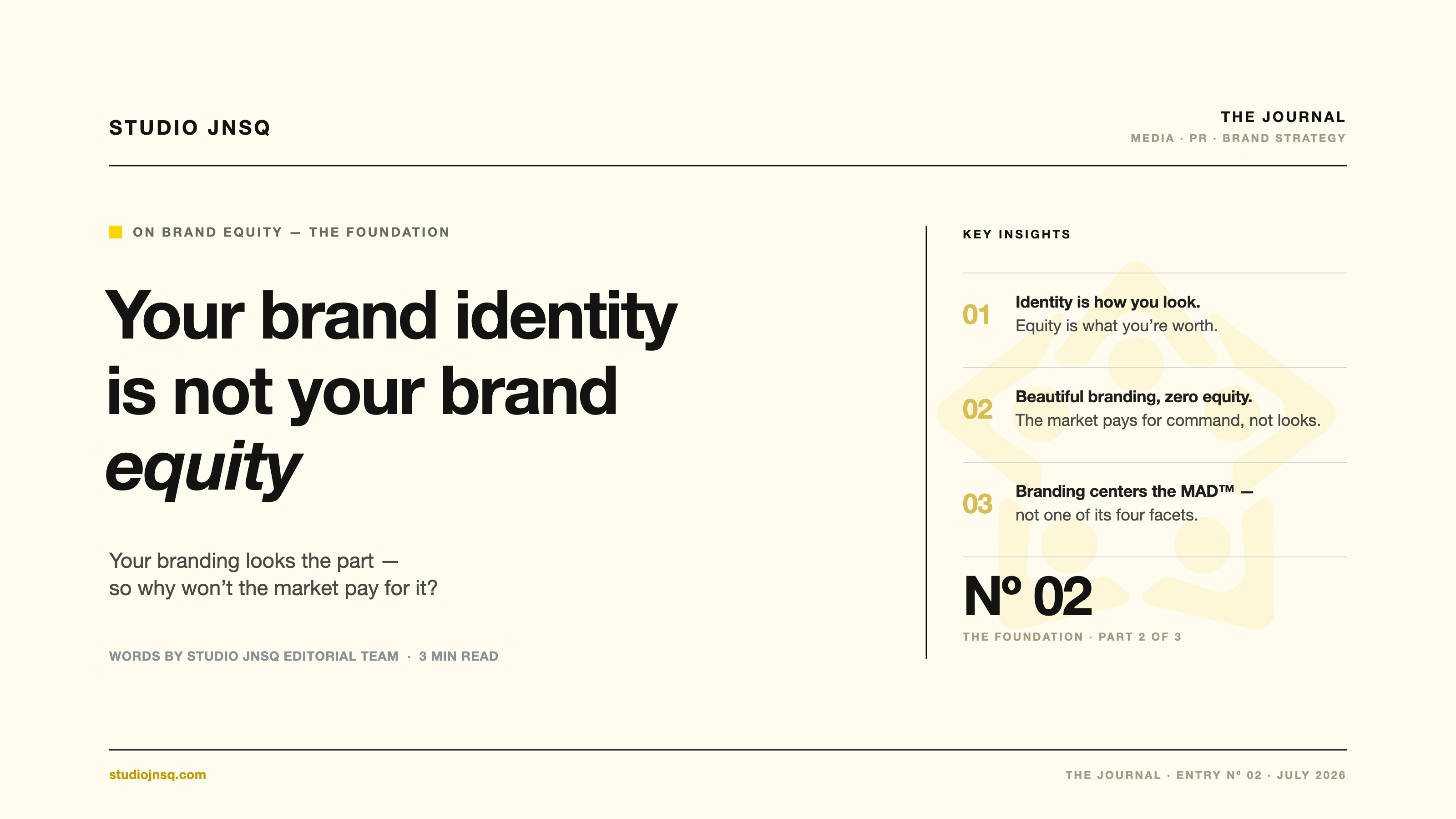
There is a version of this story almost every business owner has lived through at some point. You invest in the rebrand: new logo, new colors, new website, maybe even a new name. The designer delivers something beautiful. You launch it, share it, feel a genuine sense of momentum. Then three months pass. Revenue is flat. Clients are still leaving. Your pricing power is exactly where it was before. And you start wondering what went wrong. Nothing went wrong with the rebrand. What went wrong was the expectation. Identity work and equity work are not the same thing, and confusing them is one of the most expensive mistakes you can make in business.
You just spent $50,000 on a rebrand. Why has nothing changed?
The scenario is familiar: new logo, new colors, new website. Three months later, revenue flat, clients still leaving, pricing power the same. This is one of the most common and expensive mistakes in business. The problem is not the rebrand itself; it is what you expected it to do.
Identity signals consistency and prevents friction. Done well, it earns you a seat at the table. Done badly, you lose credibility before the conversation starts. But identity alone does not build pricing power, lower your customer acquisition cost, or raise your exit multiple. The rebrand did exactly what it was designed to do. The issue is that you needed something else entirely.
What is the difference between brand identity and brand equity?
Identity is the visible layer: logos, colors, naming, voice. It signals consistency and prevents friction. Done well, it earns you a seat at the table. Done badly, you lose credibility before the conversation starts. But identity alone does not build pricing power, lower your customer acquisition cost, or raise your exit multiple.
Brand equity is the financial premium the market assigns to your name. You can have a Pinterest-worthy aesthetic and still be showing up to every pitch because the market does not trust your company without you in the room. The market is not paying for how you look; it is paying for what you have built in the minds of buyers, decision-makers, and the people who refer business to you.
Identity contributes to recognition. Equity determines what you can charge, how much trust you carry into a room, and what your business is worth to someone who might want to acquire it.
How do you know if you need branding or brand equity work?
The diagnostic question is this: if your visual identity were stripped tomorrow and replaced with a generic template, how much of your business would still work?
If most of it would survive, your equity is in the structure underneath: the relationships, the reputation, the authority you carry in your market. If almost none of it would, your equity was identity-deep, which means it was never really equity at all. It was recognition without depth.
This is not an argument against identity; identity is necessary. It is an argument against treating identity work as if it were equity work. The two require different investments, different timelines, and different measures of success. Our MAD™ diagnostic scores your brand across four facets of market authority: Demand, Credibility, Visibility, and Market Trust, with Branding as the centering point. Branding is one of four facets, not all four facets and the centering point. The other four are where equity lives.
Identity work and equity work require different investments, different timelines, and different measures of success.
Identity signals consistency and prevents friction. Equity builds pricing power, lowers customer acquisition cost, and raises exit multiples. Confusing the two is one of the most expensive mistakes you can make in business.
- Smaller companies use brand equity architecture to stop competing on price and start commanding premium positioning before their first exit conversation.
- Bigger companies use it to raise valuation multiples, reduce dependence on founder presence, and build transferable market authority that survives leadership transitions.
"The market is not paying for how you look; it is paying for what you have built in the minds of buyers, decision-makers, and the people who refer business to you." — Jerico Lugo, MCIPR, Founder, Studio JNSQ
If you are unsure whether your brand carries equity or just recognition, start with the diagnostics. The MAD™ diagnostic scores your brand across four facets of market authority: Demand, Credibility, Visibility, and Market Trust. The RVF™ diagnostic measures how much of your revenue depends on you being in the room. Both are free, and both tell you exactly where your equity lives.
— Jec